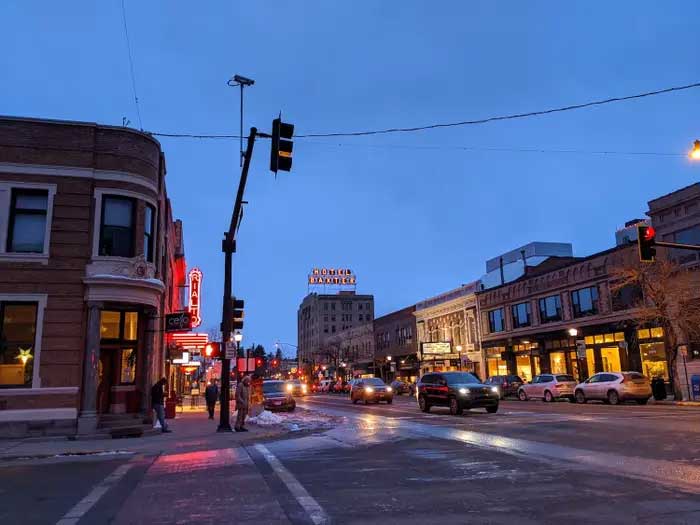
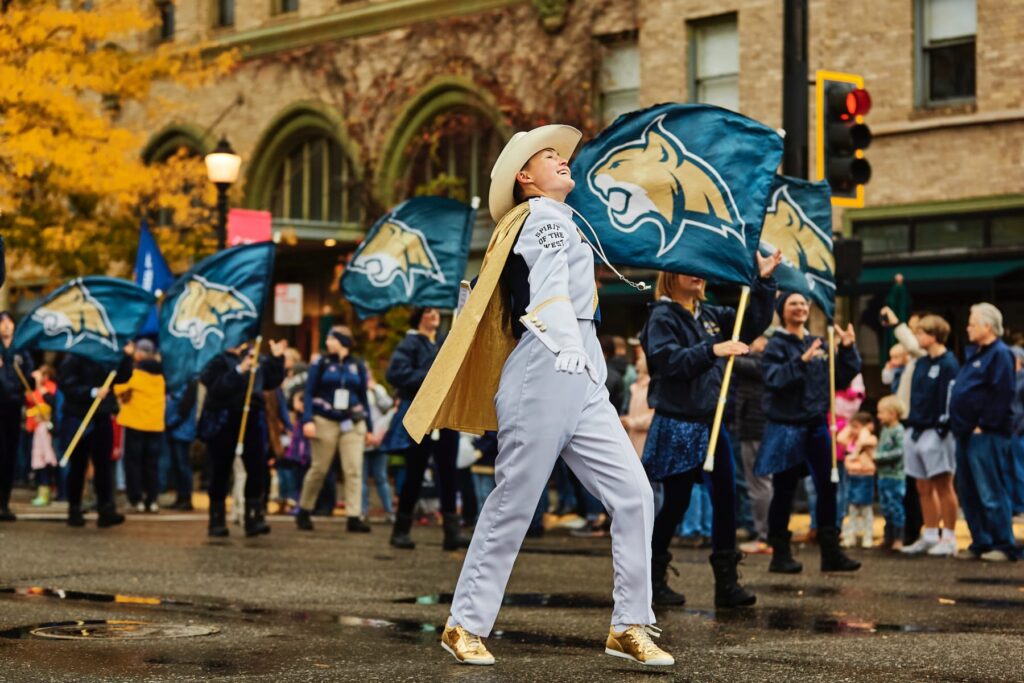
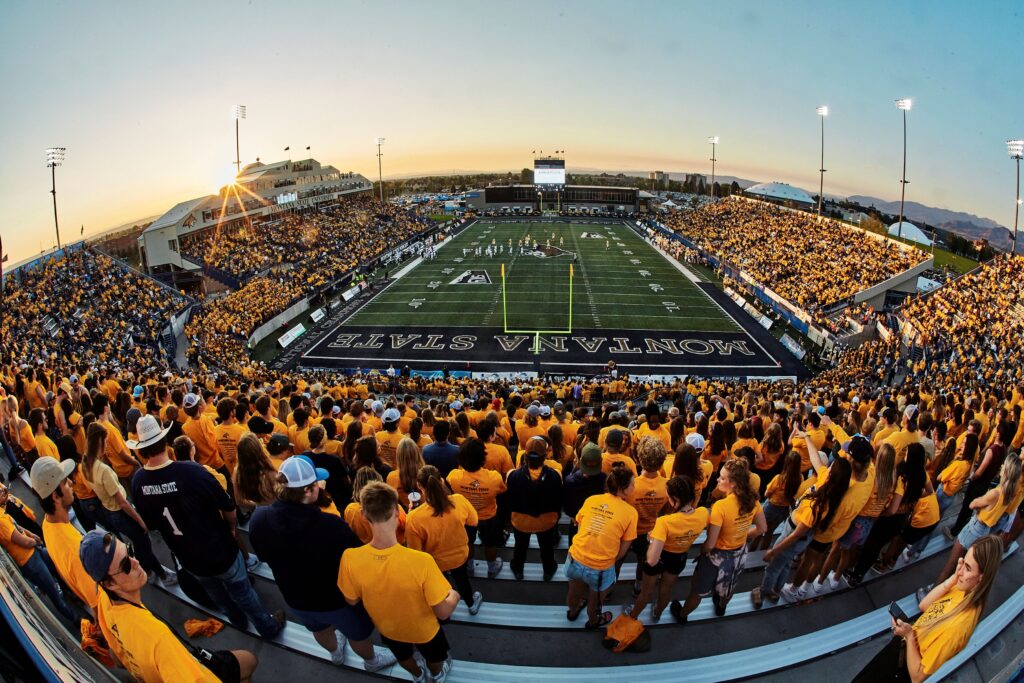
Homecoming week has Bozeman buzzing, and this Saturday the whole country gets to watch. The reigning FCS national champion Bobcats host Northern Arizona at 8:30 p.m. on ESPN2 — a nationally televised Homecoming game, the kind of exposure most towns our size never get. It’s a great excuse to look at what Bobcat football, and Montana State more broadly, actually mean for Bozeman’s economy and its real estate market.
The numbers behind a Saturday
The Bozeman Area Chamber of Commerce estimated that the first home game of last season alone brought $5 to $7 million into local businesses. During the Bobcats’ national-championship playoff run, the Chamber projected a $12 to $13 million impact across November and December — normally our slow shoulder season. One downtown retailer posted a company sales record on Gold Rush day. And the Bobcats aren’t just winning; they’re drawing crowds, averaging 21,877 fans per home game in 2025, fourth-most in the entire FCS.
We at Outlaw are very familiar with the local and regional economic impact that events like this have on our local businesses, from Big Sky PBR and Wildlands Festival — Homecoming, Gold Rush, playoff runs, even Music on Main. Weekends like this move real money through restaurants, hotels, retailers and gas stations, and a nationally televised game adds a marketing effect on top: hundreds of thousands of viewers seeing Bozeman and the Bridgers on ESPN2.
How Bozeman compares to other college towns
Game-day impact estimates vary widely by market. Virginia Tech commissioned an internal economic study of its home football games and found a $69 million annual impact on the Blacksburg region — roughly $10 million per home game — supporting close to 300 jobs, with the largest spending categories being hotels ($5.9 million), restaurants ($5 million) and gas stations ($2.9 million). Blacksburg, like Bozeman, is a small college town built around one flagship university, which makes it a closer comparison than a major metro market.
Real estate in a college town: a quick outline
- Steady demand floor: MSU’s record enrollment (17,165 students, fall 2025) and $257.9 million in research spending anchor year-round rental and housing demand independent of tourism cycles.
- Rental and investment pressure: student housing demand supports strong occupancy for rentals and condos near campus, a pattern seen in college towns nationally.
- Price resilience: Independent research comparing U.S. cities under 250,000 residents found college towns appreciated 130% in home values over the last 25 years, versus 82% for non-college towns — outperforming in month-to-month price gains more often than not. Peer-reviewed research is more mixed on whether university presence alone raises price levels, but the smaller-market appreciation edge is well documented and matches what we’ve seen in Bozeman.
- Local case in point: Gallatin County’s median home price has roughly doubled since 2019, now near $800,000, with MSU’s growth cited by realtors as one structural driver alongside tourism and in-migration.
- Event-driven bumps: game weekends and Homecoming lift short-term rental demand and hospitality revenue — a smaller, real seasonal layer on top of the university’s steady baseline effect.
Whether it’s Saturday’s kickoff or the university’s year-round footprint, MSU is one of the steadiest forces shaping Bozeman’s economy and its housing market. Go Cats.
Outlaw Realty | Big Sky & Bozeman