
Property tax bills go out across Gallatin County this fall, and they’re the first ones calculated under Montana’s full homestead system. If you own a primary home or a long-term rental, most of you will like what you see. If you own a second home, a short-term rental or a vacant lot, you probably won’t.
Here’s how the new system works and what to do about it.
Two classes of residential property
House Bill 231 split residential property into two groups for the 2026 tax year.
Homestead property covers your primary residence and qualifying long-term rentals. It’s taxed on a tiered scale:
| Portion of market value | Homestead tax rate |
|---|---|
| First $378,000 | 0.76% |
| $378,001 to $756,000 | 0.90% |
| $756,001 to $1,511,999 | 1.10% |
| $1,512,000 and above | 1.90% |
Non-homestead residential covers second homes, short-term rentals like Airbnbs and VRBOs, cabins and vacant residential lots. It’s taxed at a flat 1.90% of market value.
These rates produce your taxable value. Your local mill levies are then applied to that number to get the actual bill.
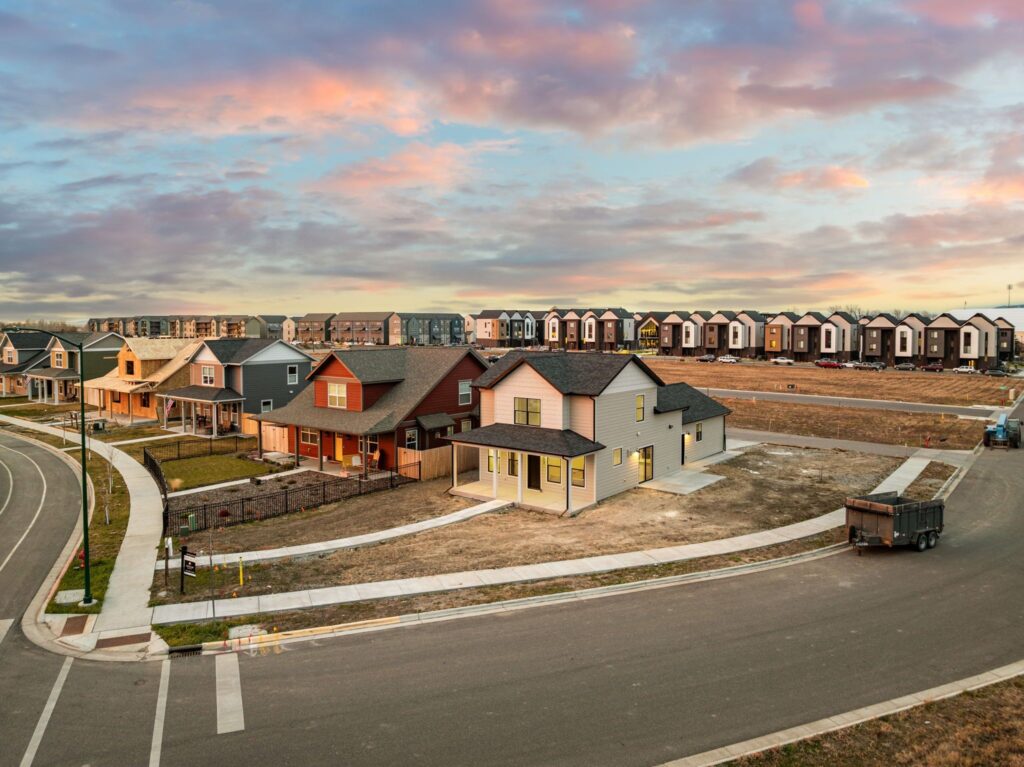
What the difference looks like
Take a $700,000 home in Bozeman.
- As a primary residence, its taxable value is about $5,771
- As a second home or short-term rental, its taxable value is $13,300
Same house, same mill levy, roughly 2.3 times the taxable value. At $1.2 million, the gap narrows to about 2 times, $11,159 versus $22,800.
That’s the whole point of the law is to shift more of the load onto properties that aren’t housing Montanans full time.
Who got the break
According to the Montana Department of Revenue, nearly 260,000 primary homes and about 36,000 long-term rental properties, representing roughly 70,000 units, enrolled in the homestead rate. The state says nearly 80% of homes saw a tax cut in the 2025 transition year.
What owners should do now
- Check your status. Look up your property on the Gallatin County iTax portal when your bill posts and confirm it’s classified correctly.
- Mark the due dates. The first half is due November 30. The second half is due May 31.
- Bought this year? Homestead status doesn’t follow the house. Once ownership changes, the new owner needs to apply. Watch for the Department of Revenue’s next application window. The last one opened December 1.
- Renting long term? Qualifying long-term rentals get homestead rates, but only if they’re enrolled.

What buyers should factor in
If you’re shopping for a second home in Big Sky or a vacation condo in Bozeman, run the taxes at 1.90%, not the rate the current owner pays. A seller who lived in the home full time may be showing you a number you won’t inherit.
For investors, the math on short-term versus long-term rentals changed. A long-term rental can now carry a tax rate well under half of what the same property pays as an Airbnb. We’ll dig into that trade-off in December.
The bottom line
Montana now rewards full-time ownership and long-term renting, and charges more for everything else. Make sure your property is in the right class, and if you’re buying, underwrite the tax bill you’ll actually pay.
Questions about how this affects a home you own or want to buy? Talk to an Outlaw agent. For tax advice specific to your situation, check with a Montana CPA.
Sources: Montana Department of Revenue, 2026 Property Tax Information; Office of the Governor, March 30, 2026; KTVH, May 20, 2025. Example figures are taxable value only and do not include mill levies.
Outlaw Realty | Big Sky & Bozeman


